
Baking Soda and Weight Management: What Women Should Know About Appetite, Cravings and More
A growing number of women are asking about a simple morning baking soda routine — and why it keeps appearing in discussions about cravings, food noise return after stopping weight-loss pens.
For many women, the experience is a familiar one: appetite feels manageable for a stretch, then something shifts — cravings return, food noise picks back up, and maintaining balance feels harder than it should. Specially after stopping using weight loss injections.
That pattern has sparked renewed interest in how the body produces appetite-regulating signals naturally — and whether gut health plays a larger role than previously understood.
Why Cravings Can Feel Hard to Control
Weight-loss injections work by mimicking hormones that signal fullness to the brain. These hormones are produced naturally in the gut by specialized cells called L-cells. When external versions are supplied consistently, the body may reduce its own production. When injections stop, natural hormone levels can take time to recover — leaving many women feeling hungrier than before.
This is a biological response, not a willpower failure. Obesity researchers increasingly recognize the post-injection rebound as a predictable hormonal pattern, particularly in women over 40 whose metabolic systems are already affected by age-related hormonal changes.
What Baking Soda May Have to Do With It
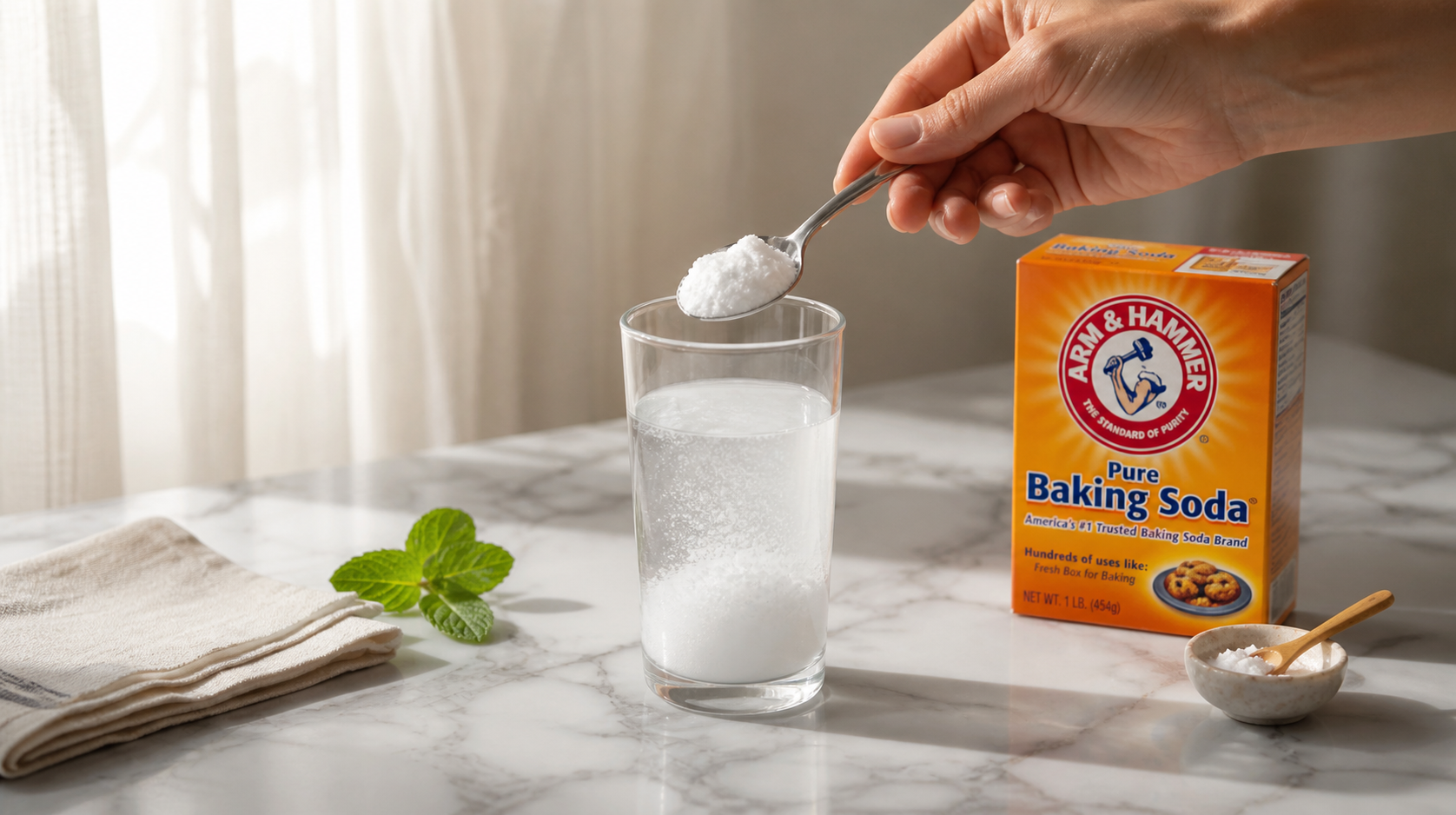
Sodium bicarbonate — baking soda — is being explored in nutritional research for its potential relationship with gut pH. Because L-cells function within the intestinal lining, some researchers suggest that an overly acidic gut environment may reduce their efficiency over time.
Some health discussions suggest baking soda may influence gut pH, which is one reason it appears in conversations about appetite and digestive balance. Research in this area is still developing, and it should not be treated as a proven or standalone solution for any health concern.
- Post-injection appetite rebound is a recognized biological pattern, not a discipline issue
- L-cells in the gut produce natural appetite-regulating signals
- Gut pH may influence how effectively those signals are produced
- Everyday factors like stress and diet can affect the gut environment
- A morning baking soda routine is discussed as a simple, water-based habit
- Always consult a healthcare provider before starting any new supplement routine
Research in this area is still developing. Baking soda is not a medically proven treatment for any condition, and individual responses vary. What the conversation does raise, however, is a broader question worth exploring: what role does gut health play in how we experience hunger day to day?
If you're researching the baking soda morning routine in the context of cravings and gut health, this short explanation may help you understand what's driving the conversation.
Watch the related explanation →The full explanation: cravings, food noise, and the morning baking soda routine
A short video breaks down the gut-hormone connection and why this simple morning habit has entered the women's wellness conversation.
Watch the full explanation →